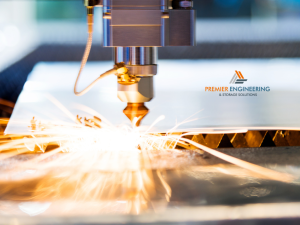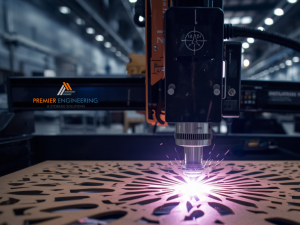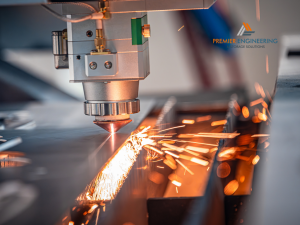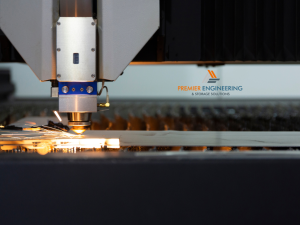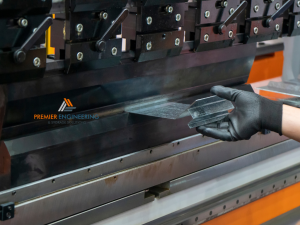
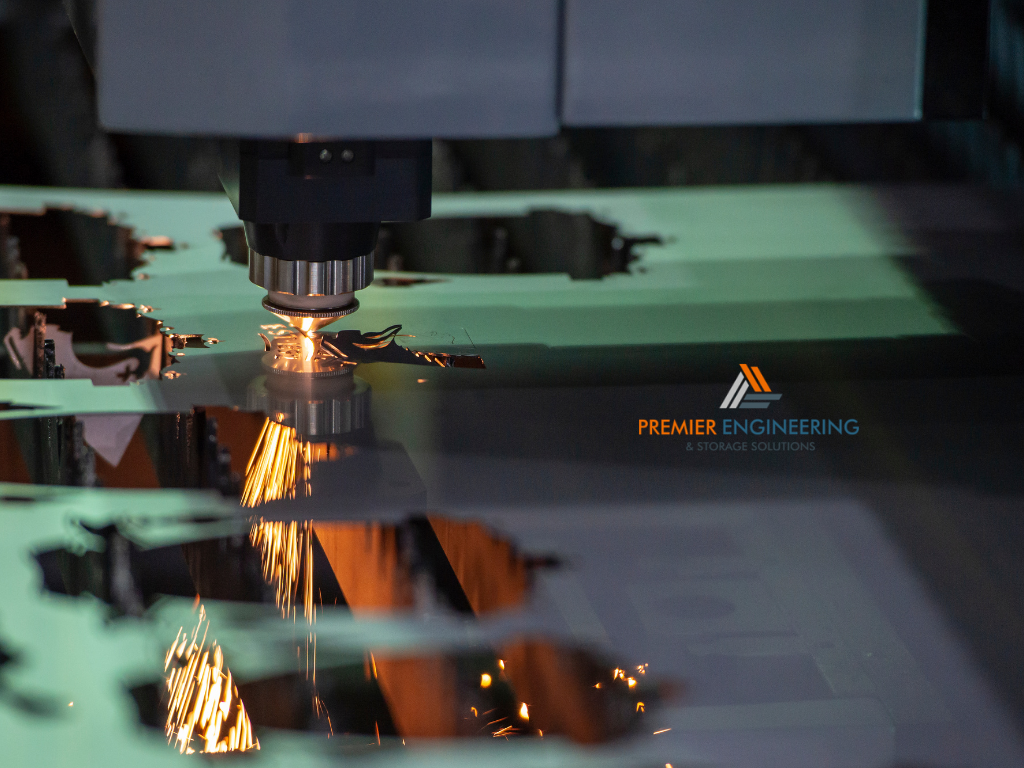
Laser cutting can produce detailed profiles, holes, slots and repeatable sheet-metal components from a digital production file. However, the quality of the finished result depends on much more than the laser cutting machine.
Material type, sheet thickness, dimensions, tolerances, edge requirements, production quantity and later fabrication stages all need to be considered before cutting begins. Missing or unclear information can delay quoting, create design questions or result in a component that does not fit its intended application.
This preparation is particularly relevant in Western Sydney, where advanced manufacturing, automation and digital production remain important parts of the local economy. The NSW Government reports that Western Sydney is home to one in five NSW manufacturing businesses and one-third of Sydney’s skilled manufacturing workforce. The Advanced Manufacturing Readiness Facility at Bradfield has also been established to help businesses develop and validate modern manufacturing methods.
For businesses comparing laser cutting Sydney services, the most useful starting point is therefore the finished part. This guide explains how to prepare a project, compare cutting options and provide a supplier with enough information to review the work accurately.
Explain what the component needs to do
Before selecting a cutting process, describe how the finished component will be used.
A decorative panel has different requirements from a bracket, equipment cover, machine component or part that must fit into an existing assembly. A visible part may require a clean and consistent edge, while an internal component may place greater importance on hole position, strength and dimensional fit.
Explain whether the part will be used indoors or outside. Mention whether it will carry weight, experience vibration, face regular cleaning or operate near heat, moisture or chemicals. These conditions can affect the material grade, thickness, coating and fabrication method.
The supplier should also know how the component connects to other parts. State whether it will be welded, folded, bolted, riveted or fitted into an existing structure. Where several components form an assembly, provide an overall drawing as well as drawings for the individual parts.
This context helps the supplier understand why particular dimensions matter. It may also reveal that a design needs bending, welding or another manufacturing stage after laser cutting.
Customers seeking high-precision sheet metal parts should avoid using “high precision” as the only quality instruction. The drawing should identify which measurements control the fit and what variation the finished application can reasonably accept.
Identify the important dimensions and production quantity
Not every dimension requires the same level of control.
A hole pattern that aligns with existing equipment may be critical, while an outside decorative edge may permit more variation. A slot that receives a fitted component may require closer control than an edge that will later be trimmed or concealed.
Mark critical dimensions clearly rather than expecting the fabricator to identify them from the shape alone. Include the overall length, width and material thickness, followed by the locations and sizes of holes, slots, notches and cut-outs.
The quantity also affects production planning. One prototype may be programmed and arranged differently from a repeated production order. Larger quantities may provide more opportunity to nest several parts efficiently on a sheet, but the result still depends on component size, geometry, material direction and required spacing.
State whether the quoted quantity is for initial testing, one complete project or an expected ongoing order. When future repeat production is likely, a controlled part number and drawing revision can reduce confusion.
Providing this information from the beginning gives the supplier a better basis for reviewing material use, setup requirements and the most practical production method.
Match the Material and Design to the Cutting Process
A CNC laser follows a programmed cutting path to process sheet material. Modern fibre laser systems can cut common sheet metals including steel, stainless steel and aluminium, although the actual material and thickness range depends on the specific machine and cutting setup. Official machine information also shows that cutting quality, beam settings and process controls can vary according to material thickness.
Laser cutting is often considered for detailed two-dimensional profiles, repeated components and parts containing holes or internal cut-outs. It may be suitable when the design requires a narrower cutting path or greater geometric flexibility than a basic mechanical cutting process.
However, the most advanced process is not automatically the best choice for every part. A simple rectangular blank may be produced more practically by another cutting method. A large repeated pattern of standard holes may suit CNC punching, particularly when the available tooling matches the design.
Material thickness also affects the result. As thickness increases, cutting speed, edge condition, heat input and machine capability can become more important. The supplier should confirm whether its equipment is appropriate for the proposed grade and thickness.
Do not select a service only because its cnc cutting machine has a high advertised power rating. Machine power is only one factor. Cutting head technology, process control, material quality, maintenance and operator knowledge can also affect the finished component.
Separate metal cutting from acrylic and other CNC services
People searching for acrylic laser cutting Sydney may be looking for signage, lettering, displays, guards or clear fabricated components. These projects are different from sheet-metal production and may require a specialist plastic fabricator.
Suitable acrylic can produce a clean-looking laser-cut edge, but not every plastic should be processed with a laser. Plastic type, sheet thickness, heat response and required finish must be checked before production. The available project notes also emphasise that laser cutting, routing and saw cutting suit different materials and geometries.
Metal laser cutting suppliers should not automatically be assumed to process acrylic, and acrylic specialists should not automatically be assumed to produce structural metal parts. Confirm the material capability before sending a final drawing.
Other cnc cutting services may include routing, punching, machining or saw cutting. CNC routing can be useful when a component requires pockets, recesses or machined features rather than a simple through-cut. CNC punching can suit repeated holes, louvres or formed features when appropriate tooling is available.
The correct process should be chosen according to the finished component, not simply according to the machine named in the initial enquiry. A capable supplier should explain when laser cutting is suitable and when another process may be more practical.
Prepare Clear Drawings and Digital Files
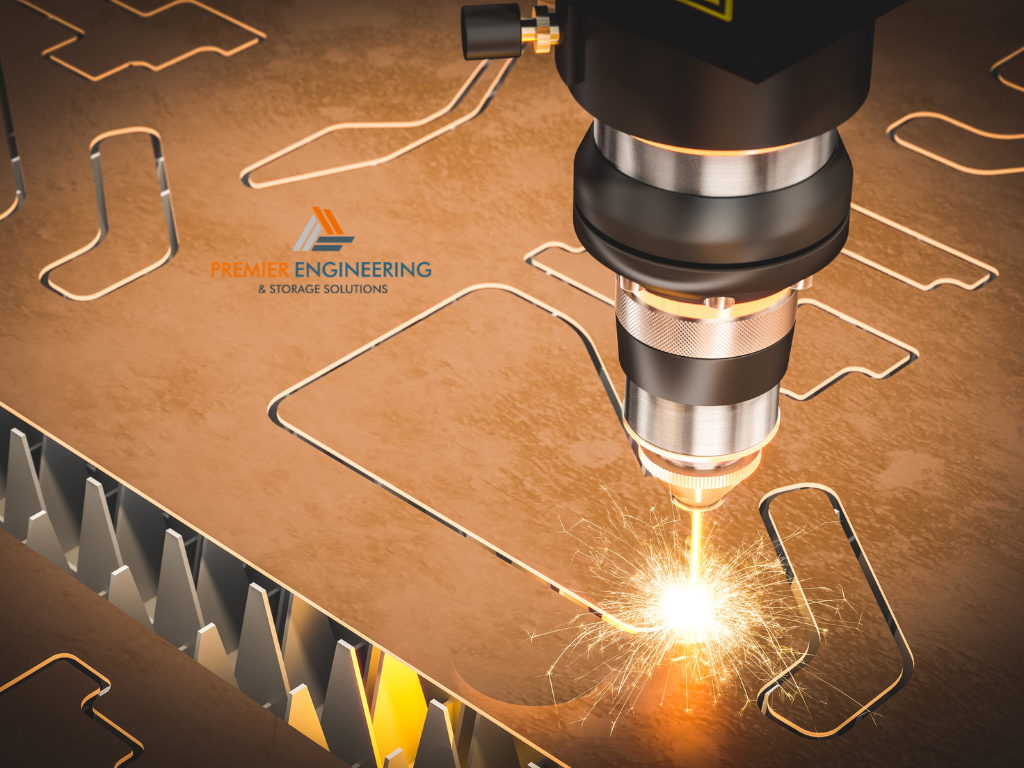
Include the information needed for programming and quoting
A detailed project usually needs both a production file and a readable drawing.
The digital file provides the geometry used for programming, while the drawing explains dimensions, materials, tolerances and other manufacturing requirements. A file containing only the outside shape may not explain which side is visible, which holes are critical or whether the part will later be bent.
Confirm the file formats accepted by the supplier before preparing the final package. Different workshops may use different CAD, CAM and production software. A common exchange format may be suitable for the cutting path, while a dimensioned PDF can provide a clear visual reference.
The file should be drawn at the correct scale and use consistent measurement units. Australian sheet-metal drawings commonly use millimetres, but the project should state the unit rather than leave it to assumption.
Check that the cutting profiles are complete. Open paths, overlapping lines, duplicated geometry and very small accidental features can create questions during programming.
Each file should also have a clear name, part number and revision. Avoid sending several attachments named “final,” “final revised” and “latest final.” A controlled revision system helps the supplier identify which file has been approved for production.
Mark holes, profiles, tolerances and design revisions
Every hole should include a diameter and location. Hole positions can be measured from fixed reference edges or shown through a clear coordinate system.
Slots require their width, length and position. Cut-outs, corner radiuses and notches should receive the same attention as the outside profile.
Very small holes, narrow sections and sharp internal details may not be practical in every material thickness. Laser cutting uses a physical cutting path, and the relationship between feature size, material and process must be reviewed by the fabricator.
State tolerances only where they are needed. Applying an unnecessarily tight tolerance to every dimension may increase inspection requirements or require a different production approach without improving the finished product.
The drawing should distinguish between general dimensions and measurements that control assembly. When a part must fit an existing item, provide information about the mating component rather than sending the new part in isolation.
Any design change should create a new drawing revision. Record what changed, issue the revised file and withdraw the previous version. This becomes especially important when several people are involved in approval, purchasing and production.
Understand What Affects the Quoted Price
Laser cutting prices are influenced by the complete production scope rather than the outside dimensions alone.
Material type and thickness affect material cost, cutting settings and processing time. The amount of sheet required also depends on how the parts can be arranged during nesting.
An irregular component may leave more unused sheet than a simple rectangular part. Changing the orientation or spacing of repeated components can sometimes improve material use, but nesting should not compromise part quality or required material direction.
Setup and programming also form part of the work. A one-off component may require drawing review, file preparation and machine setup before a short cutting cycle begins. This is one reason the unit price for a prototype can differ from a larger repeat order.
Complex geometry can affect processing time. A part containing many small holes and short internal movements may take longer to cut than a similarly sized part with a simple outside profile.
Current metal prices can also affect the quotation. ABS producer-price data for December 2025 recorded a quarterly increase in primary metal and metal-product inputs to manufacturing, showing why material pricing should be confirmed for the actual order rather than assumed from an older project.
Account for finishing, fabrication, packaging and delivery
A laser-cut part may still require additional work before it is ready to use.
Depending on the project, later operations may include deburring, tapping, countersinking, folding, welding, fastening, grinding, coating or assembly. These stages should be included in the enquiry when the customer needs a finished component rather than cut blanks.
Edge appearance should also be clarified. Some applications may accept the standard cut condition, while visible or handled components may require additional finishing.
Protective packaging can be important for painted, polished or presentation-grade parts. Ask how the components will be separated and protected during transport, particularly when surface scratching would make them unsuitable for use.
Delivery pricing depends on the quantity, dimensions, weight and destination. Large sheets or fabricated assemblies may require different transport arrangements from small flat components.
When comparing quotations, make sure each supplier is pricing the same scope. A lower figure may cover cutting only, while another quotation may include material, finishing, inspection, packaging and delivery.
An accurate comparison therefore requires more than looking at the final total. The quotation should explain what is included, excluded and subject to confirmation.
Define the Required Quality Before Production
Agree on edge condition, appearance and inspection
Terms such as “clean edge,” “accurate” and “high quality” can mean different things to different people.
Define the result according to the application. A structural component may prioritise fit and strength, while an exposed panel may require a more consistent visual finish.
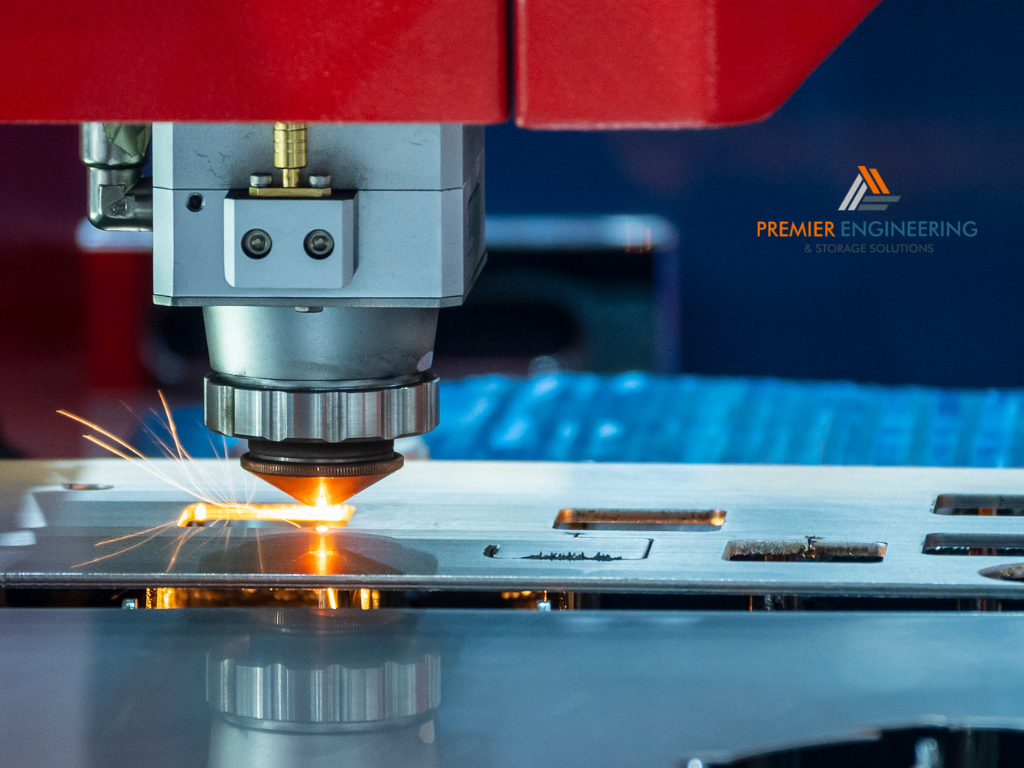
Modern fibre laser systems are designed to produce precise sheet-metal parts across different materials and thicknesses, but edge quality still depends on the material, machine configuration and selected cutting parameters. Some systems use beam shaping, process monitoring and automatic parameter selection to improve stability and edge quality.
Ask whether the part will have visible burr, oxide, heat discolouration or other process marks. The answer may change according to the material and cutting method.
Inspection requirements should be agreed before production. A basic commercial component may need normal workshop checking, while a fitted or high-precision part may need documented measurements of specified dimensions.
Do not request a full inspection report unless the project genuinely needs one. Additional documentation and measurement can affect the production scope and price.
For regulated, structural or safety-critical components, the drawing and inspection requirements should be prepared or approved by an appropriately qualified person. Laser cutting does not replace engineering design or project-specific certification.
Use prototypes and approved samples where appropriate
A prototype is useful when the component must fit existing equipment, align with another fabricated part or satisfy a particular visual expectation.
The prototype can reveal problems with hole locations, clearances, assembly sequence and material thickness before a larger run is produced. It may also show that the design needs a larger corner radius or more space around a bend.
Testing should be completed under realistic conditions. A cover should be placed over the equipment it is intended to protect. A bracket should be checked with the actual fasteners and adjoining components.
Once the prototype is approved, update the production drawing to include every accepted change. The approved sample should not be the only record of the final design.
For repeat orders, ask whether the supplier retains the approved production file and how revisions are controlled. The customer should still maintain its own authorised drawing rather than relying entirely on the workshop’s records.
A prototype may add time to the beginning of a project, but it can reduce the risk of repeating the same design issue across an entire batch.
Choose the Right Sydney Cutting Service
Businesses comparing laser cutting Western Sydney providers should examine the complete workshop capability.
Start by confirming which materials and thicknesses the supplier processes. Ask about the available sheet size, cutting method and whether the equipment suits the proposed component.
The supplier should also explain whether it offers cutting only or broader sheet-metal fabrication. A project requiring folding, welding or assembly may be easier to coordinate when the relevant stages are managed through one production workflow.
However, a large service list does not guarantee that every process is completed internally. Ask which operations are performed onsite and which are outsourced.
Customers comparing cnc cutting services western sydney should also confirm whether laser cutting, punching, routing or other processes are being discussed. These services are not interchangeable, and a workshop may specialise in one material or production type.
Request information about quality checks, file control and repeat-order procedures. Any certifications, formal tolerances or inspection capabilities promoted by a supplier should be verified for the exact service and current certification period.
The current Premier Engineering keyword report confirms that the business is positioned around laser cutting and CNC sheet-metal services, but project-specific capabilities should still be confirmed directly.
Review communication, lead times and repeat-order support
Good communication begins during the quotation stage.
A supplier should identify missing dimensions, unclear materials or conflicting files before production begins. It should not silently choose important design details when the customer has not provided enough information.
Ask what happens after the order is approved. The process may include drawing review, material ordering, programming, production, inspection, finishing and delivery.
Lead time should be confirmed for the complete scope rather than the cutting stage alone. Material availability, external coating, fabrication and freight can affect the final schedule.
For urgent work, ask whether the required date is realistic before issuing the order. Avoid assuming that an urgent fee guarantees material availability or machine capacity.
Repeat-order support is also important. Confirm how the supplier identifies the approved file, records drawing revisions and handles changes between production runs.
A local Western Sydney provider may make sample reviews, collections and workshop communication more convenient. However, location should be considered alongside capability, quality, communication and the suitability of the proposed manufacturing process.
Know When to Contact Premier Engineering
Seek advice before finalising complex sheet-metal parts
Premier Engineering may be contacted when a Sydney business needs laser-cut sheet-metal components or wants to discuss whether a design suits available cutting and fabrication processes.
Early contact is useful when the component contains close-fitting holes, narrow sections, detailed cut-outs or several parts that must align during assembly.
It is also helpful when the project requires later operations such as bending, welding or finishing. The production sequence may affect hole placement, clearances and material selection.
Customers should not wait until every design decision is locked in when they are unsure whether a feature can be manufactured practically. A preliminary review may identify details that should be adjusted before the final production file is issued.
Current machine capacity, accepted materials, maximum sheet size, thickness limits, standard tolerances, secondary operations and production availability should be confirmed directly with Premier Engineering for the proposed project.
Where the component is structural, safety-related or governed by a technical standard, obtain the appropriate engineering or regulatory advice before production.
Prepare the information required for a useful quotation
Begin the enquiry with a short description of the finished component and its purpose.
Provide the material grade and thickness where known. Include the quantity, overall dimensions and required completion date.
Attach the production file and a dimensioned drawing. The drawing should identify holes, slots, radiuses, cut-outs, critical dimensions, tolerances and the current revision.
Explain which surfaces will remain visible and whether the part needs deburring, bending, welding, coating or assembly. State whether you require cutting only or a more complete fabricated item.
Include the delivery suburb or advise that collection is being considered. For a laser cutting Sydney enquiry involving a larger assembly, mention any delivery access restrictions.
When seeking high-precision sheet metal parts, identify the dimensions that genuinely require close control and explain how they affect fit or performance.
Finally, ask the quotation to confirm material supply, setup, cutting, secondary work, inspection, packaging, delivery and any excluded services.
The more complete the enquiry, the easier it becomes for Premier Engineering to assess the project and identify information that still needs clarification. It also gives the customer a consistent scope for comparing the quotation with other cnc cutting services.
A successful laser cutting project begins before the machine is switched on. By defining the finished part, preparing controlled files and agreeing on quality requirements early, Sydney businesses can reduce assumptions and move from design to production with greater confidence.