A clear quotation begins with clear project information.
A supplier cannot assess a job accurately from a photo, rough sketch or short message alone. The quote may need to cover material, programming, machine time, cutting, secondary fabrication, finishing, inspection and delivery.
Customers searching for laser cutting Sydney services may need anything from one prototype to a repeat production run. The job could involve brackets, panels, cabinets, machine guards, enclosures or high-precision sheet metal parts.
Each project has different requirements. For that reason, the supplier needs to understand the complete scope before confirming price, timing or manufacturing suitability.
The following guide explains what to prepare, what details matter and how to compare quotations more confidently.
A drawing shows the shape of a part, but it may not explain how the part will be used.
A short project description gives the supplier useful context. It can also reveal requirements that may not appear in the cutting file.
Explain What the Finished Part Must Do
Describe the purpose of the component.
State whether it will form part of a cabinet, machine, bracket, enclosure, guard, sign or structural assembly. Also explain whether it will be visible or hidden after installation.
The operating environment matters. A part used indoors may have different material and finishing needs from one exposed to weather, moisture, heat or chemicals.
Mention how the component will connect with other parts. It may need mounting holes, tabs, slots or clearance around another assembly.
This information helps the supplier review whether the material, thickness and cutting method suit the intended use.
A fabrication company may offer manufacturability advice. However, the customer should still confirm structural, safety or engineering requirements where the part performs a critical function.
Define Whether the Job Is a Prototype or Production Run
State the required quantity.
A one-off prototype may require different programming and handling from a repeat order of hundreds of parts. The supplier may also plan the sheet layout differently for larger quantities.
Explain whether the order is the first test version or the final design.
For prototypes, identify which features may still change. A supplier can then avoid treating the file as a fixed production design.
For repeat work, mention the expected future quantities and ordering frequency. This may affect material planning, file control and part identification.
Do not request a large production run from an untested drawing unless the design has already been reviewed and approved.
A first-part or sample approval may be useful when fit, appearance or assembly is important. Confirm whether this process is included in the quotation.
Provide the Right Drawings and Digital Files
A supplier usually needs more than one type of file.
A dimensional drawing explains what the finished part must achieve. A CAD or vector file provides the geometry used for programming the cnc cutting machine.
Providing both can reduce uncertainty.
Send a Readable Drawing With Dimensions
The drawing should show the main dimensions clearly.
Include the overall length and width, hole sizes, hole positions, slots, cut-outs and any important radiuses. If the part will be folded, show the bend lines, angles and finished dimensions.
Mark the units. Do not assume the supplier knows whether the drawing uses millimetres or another measurement system.
Add a part name or part number. This helps when the quote contains several components.
The drawing should also carry a revision number and date. Revision control becomes important when files change during design or repeat production.
Highlight dimensions that affect fit or function. A supplier should not have to guess which measurements are critical.
PDF drawings are useful for review. However, they may not provide the clean cutting geometry needed for machine programming.
Include a Suitable CAD or Vector File
Ask the supplier which file formats it accepts.
Common production files may include DXF, DWG or another compatible CAD format. Some providers may also accept other vector or three-dimensional files.
The file should use the correct scale. It should also contain clean geometry.
Duplicate lines can cause programming problems. Open profiles, overlapping shapes and disconnected corners may also need correction before cutting.
Remove notes, title blocks and construction lines from the production geometry where appropriate. Keep them in the dimensional drawing instead.
A flat cutting file should represent the correct developed shape. If the component will be bent, the flat pattern may need to account for material, thickness, bend radius and tooling.
Where the supplier will develop the flat pattern, provide the finished dimensions and complete folding information.
Premier Engineering lists CAD, prototyping, laser cutting and brake press work among its broader manufacturing capabilities. Confirm the required file format and design scope before submitting a job.
Confirm the Material and Thickness
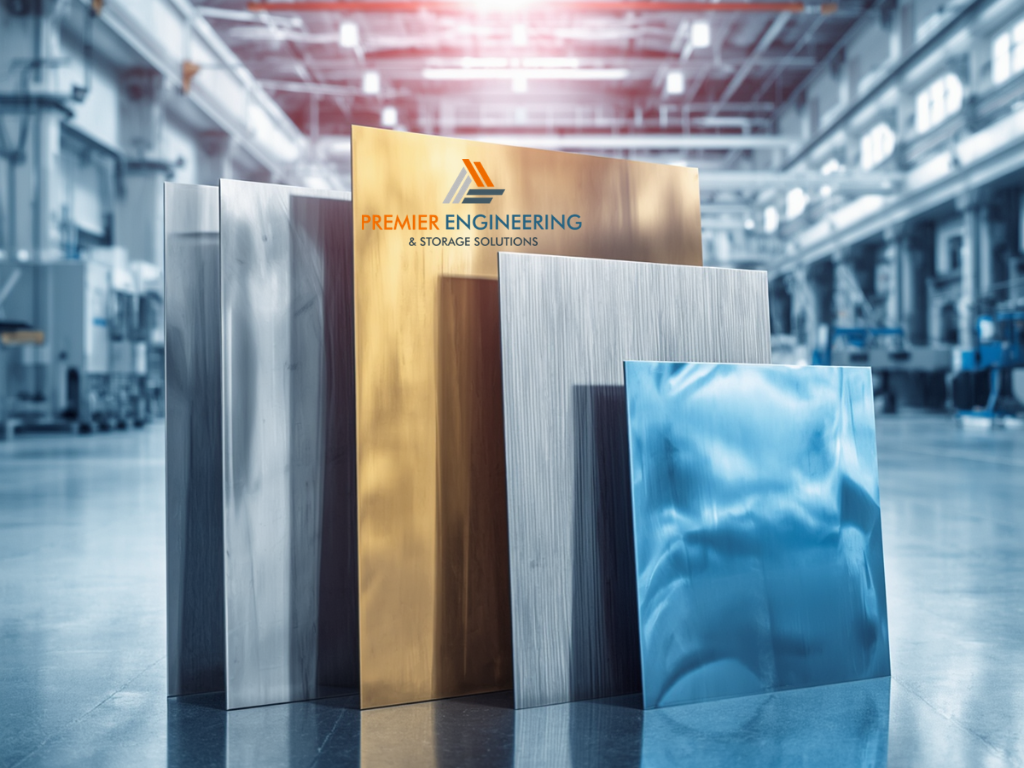
Material has a direct effect on cutting, forming, welding, finishing and final performance.
Avoid writing only “steel” or “metal” on the enquiry. These descriptions may not provide enough information for an accurate quote.
Specify Material Type and Grade
State whether the part requires mild steel, stainless steel, aluminium or another material.
Where possible, include the required grade. Different grades may vary in strength, corrosion resistance, appearance and fabrication behaviour.
Mild steel often suits general fabricated parts that will receive a protective finish. Stainless steel may suit applications where corrosion resistance, hygiene or a visible metal surface matters. Aluminium may suit projects where lower weight is important.
The right choice depends on the application.
Do not substitute one grade for another without approval. Even when two materials look similar, their performance and fabrication requirements may differ.
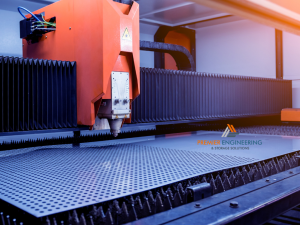
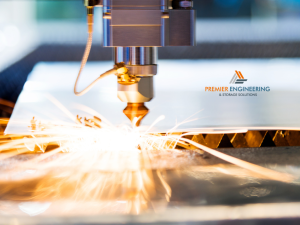
Premier Engineering’s published laser cutting capability focuses on sheet metal and identifies an AMADA ENSIS-AJ 3 kW machine. Its page states that the machine can process mild steel up to a published maximum capacity. The exact grade, thickness and design still need project-specific confirmation.
State the Required Thickness and Surface Condition
Include the sheet thickness in the enquiry.
Thickness affects material cost, cutting time, stiffness, weight and later bending. It may also affect the smallest practical holes or narrow sections.
Do not select thicker material only because it appears stronger. Extra thickness may add weight and complicate forming.
The correct thickness should suit the load, span, fixing method and intended use. Structural parts may require formal engineering confirmation.
Also describe the required surface condition.
Visible stainless steel or aluminium may need protection during fabrication. Some sheets may arrive with protective film on one or both sides.
State whether the finished surface will remain visible. Identify the presentation face where scratches or handling marks would be unacceptable.
Confirm whether the supplier will provide the sheet or cut customer-supplied material. If you supply it, include the sheet size, grade, thickness and condition.
Identify Tolerances and Important Features
Not every dimension requires the same level of accuracy.
A general outside profile may allow normal production variation. A mounting pattern or locating slot may require closer control.
The drawing should make this difference clear.
Mark Dimensions That Affect Fit or Function
Identify the dimensions that control assembly.
These may include hole centres, mounting slots, distances between edges and holes, mating surfaces or finished folded dimensions.
Explain what the part must fit.
A photo or reference component can provide context. However, it should not replace accurate measurements.
Avoid applying a close tolerance to every feature without a practical reason. Unnecessary tolerances may increase inspection and production requirements.
Discuss whether a tolerance applies to the flat laser-cut blank or the completed fabricated part. Bending, welding and coating can affect final measurements.
For high-precision sheet metal parts, the supplier may need to review the complete manufacturing sequence before confirming achievable tolerances.
Any formal inspection or measurement report should be requested during quotation. Do not assume it comes with every order.
Review Features That May Be Difficult to Manufacture
Some details may need review before cutting.
Very small holes can be difficult to produce in thicker sheet. Narrow sections may become weak or move during processing.
Closely spaced cuts can place extra heat into a small area. Thin tabs and detailed internal corners may also affect edge condition or flatness.
Features close to a future bend line deserve special attention. A hole or slot may distort during forming.
The supplier may recommend a small design change. This could involve increasing a hole size, moving a feature or adding a radius.
Do not accept design changes without updating the drawing. Every approved change should appear in the final revision.
Laser cutting and CNC punching may both suit sheet metal work. A turret punch can also complete operations such as forming, tapping or extruding on suitable projects. The correct method depends on the part rather than one process always being better.
Include Secondary Fabrication and Finishing
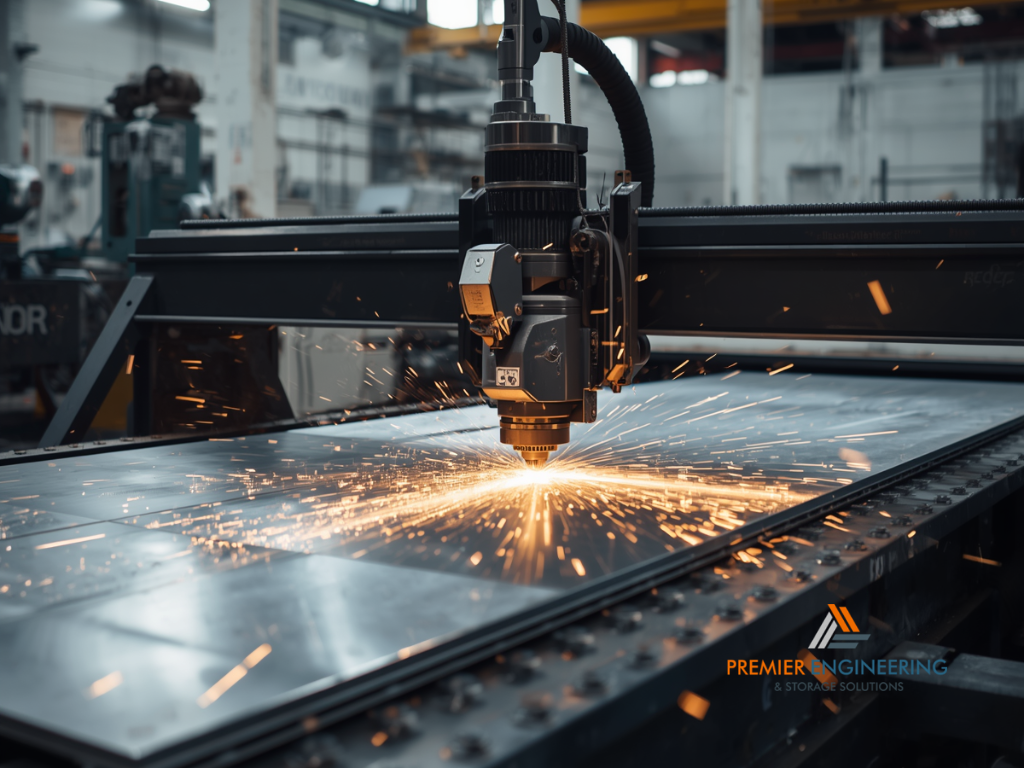
Cutting may be only the first stage.
A low cutting price can become misleading when the part still needs bending, welding, drilling, coating or assembly.
Describe the complete finished requirement in the original enquiry.
Explain What Must Happen After Cutting
State whether the part needs bending.
Provide bend angles, directions and finished dimensions. Also identify any critical flange sizes or clearances.
Mention welding requirements. Explain which parts join together and whether the weld will remain visible.
Other work may include drilling, tapping, countersinking, machining or fastener insertion.
Where several parts form one assembly, include an assembly drawing. Part drawings alone may not show how the components must fit together.
Premier Engineering publishes a wider capability range that includes laser cutting, CNC brake press forming, CNC punching, welding, prototyping, fastener insertion and finishing support. This can be relevant when a project requires more than cut blanks.
Confirm which stages the quotation includes. Some work may be completed by approved subcontractors rather than at the same facility.
State the Required Finish and Appearance
Explain how the part should look when completed.
Powder coating may suit many fabricated steel products. Other projects may need plating, anodising, galvanising or a natural metal finish.
Specify the colour or finish standard where one applies. Do not rely only on a general colour name when an exact match matters.
Identify areas that need masking. Threads, electrical contact areas and tight-fitting surfaces may need protection from coating.
Coating thickness can affect holes, clearances and mating parts. Include the finish before the final design approval.
Also describe the required edge condition. Some parts may need simple deburring, while visible or handled components may need more detailed finishing.
Packaging matters when the surface is important. Ask how completed parts will be separated, protected and delivered.
Premier Engineering lists powder coating and access to plating, anodising and galvanising within its published manufacturing services. Confirm current options and quotation inclusions for the specific project.
Know When to Contact the Supplier Early
Early discussion can save time when the design is complex or incomplete.
Do not wait until every detail has been finalised if important manufacturing questions remain unresolved.
A supplier can often identify issues before programming or material ordering begins.
Request Advice Before Finalising Complex Designs
Contact the supplier early when the project uses an unfamiliar material.
Early review also helps when the drawing contains detailed profiles, narrow sections or many small holes. Parts with close tolerances or several folds may also need extra planning.
Ask for advice when laser cutting is only one stage in a larger assembly.
A feature that cuts easily may cause problems during bending or welding. Reviewing the complete part can reveal these issues sooner.
Customers comparing laser cutting Western Sydney providers should check whether the company offers cutting only or broader design and fabrication support.
Acrylic projects need separate confirmation.
Acrylic laser cutting Sydney services use different machines, settings and extraction requirements from sheet metal cutting. Premier Engineering’s main published capability centres on metal manufacturing. Do not assume that acrylic cutting is included without direct confirmation.
Send Complete Details When Requesting a Quote
Attach the latest drawing and production file.
State the material, grade, thickness and quantity. Identify critical dimensions and any special tolerance requirements.
Explain all secondary work. This includes bending, welding, tapping, machining, coating and assembly.
Add the required completion date. Make it clear whether the date refers to collection, dispatch or delivery.
Include the delivery location where freight forms part of the request.
Mention any inspection, labelling or packaging requirements.
Premier Engineering is based in Ingleburn in south-western Sydney and provides laser cutting with broader sheet metal manufacturing services. A complete enquiry gives its team a stronger basis for reviewing the job and preparing a relevant quote.
Compare Quotes and Confirm the Production Scope
Two quotations may look similar while covering different work.
One may include material and finishing. Another may cover cutting only.
Compare each proposal against the same project scope.
Check What Each Quotation Includes
Confirm whether the price includes material supply.
Ask whether programming, setup and nesting are included. Also check whether the supplier has allowed for deburring and part separation.
Review every secondary process.
Bending, welding, tapping, coating, inspection, packaging and delivery should appear clearly where required.
Check the quoted quantity and drawing revision.
Ask whether pricing changes when the quantity changes. A prototype price should not automatically be treated as the unit rate for a larger production order.
Lead time should also be clear. Confirm when the schedule begins. It may begin after written approval, material availability or payment.
A useful quotation should identify exclusions as well as inclusions.
Approve the Final Drawing Before Manufacturing
Review the drawing before production starts.
Confirm the part number, revision, material, thickness and quantity. Check every critical dimension and fabrication note.
Make sure verbal changes have been added to the drawing.
Written approval protects both the customer and the supplier from confusion.
For repeat orders, use the approved part number and revision. Do not send an old file with a message explaining that only one feature has changed.
Ask how the supplier stores and controls repeat-order files.
Premier Engineering may be suitable for customers seeking cnc cutting services Western Sydney together with design and fabrication support. Before ordering, confirm machine capacity, material availability, tolerances, finishing and the final delivery scope.
A well-prepared request makes supplier comparisons easier. It also reduces the risk of missing work, unclear assumptions and preventable production delays.